

Poroshenko urges Washington to bolster Ukraine’s defense with more weapons
Source: European Solidarity
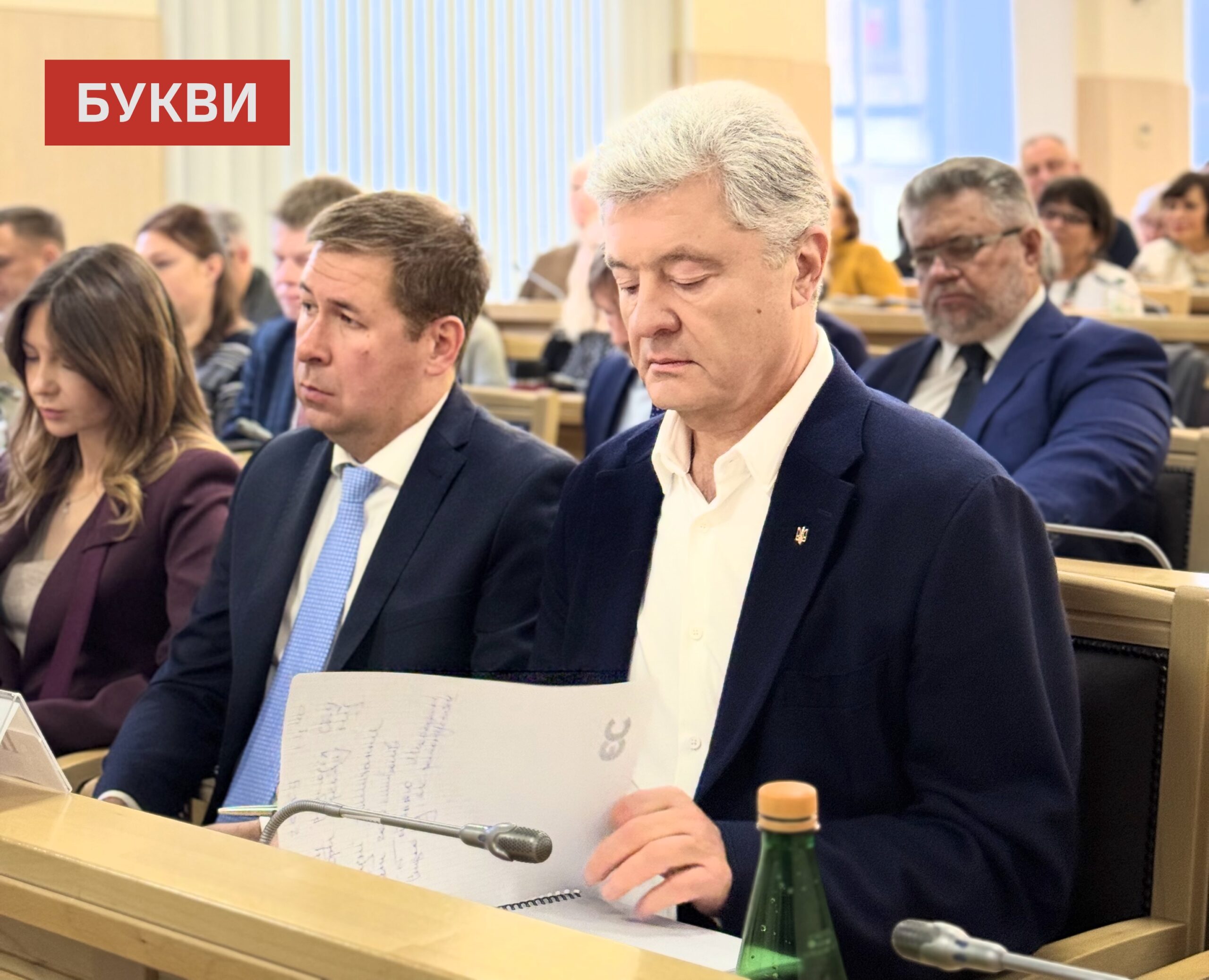
In his address at the Council on Foreign Relations in Washington, former Ukrainian president Petro Poroshenko rallied Ukraine’s allies to help his country with more military aid as its troops now have to deal with the situation where the Kremlin is sent reinforcements and weapons from the partners like Iran and North Korea.
“The next 50 days are crucial not just for Ukraine’s future, but for the entire world. Every lost day means innocent lives lost,” Poroshenko stresses, pointing to the devastating toll of Russian attacks.
The politician who is using his own money to aid Ukrainian troops brought up the alarming facts: in September and October alone, Russia launched 1,700 and 2,070 Iranian-made Shahed drones at Ukraine, with more than 2,000 ballistic missiles, including North Korean ones, delivered to Russia in October. By contrast, Ukraine received only 130 air defense missiles in the same period.
“This war is not just Russia against Ukraine. It’s Russia, Iran, and North Korea against us all,” Poroshenko warned, suggesting that NATO countries could eventually face similar threats.
The former president said the West should accomodate its economies to a wartime footing, which will allow to make Western artillery shells less expensive and more abundant.
“Our shell costs over $6,000 to produce, while Russia pays North Korea just $450. We need to make our shells for $500 and produce them faster,” he explained.
Poroshenko urged Ukraine and its allies to focus on technological advancements to offset Russia’s numerical advantage. He suggested that Ukraine needs 3,000 strike drones to counter 2,000 drones deployed by Russia, enabling decisive strikes deep into enemy territory.
The politician also questioned the hesitation about Kyiv’s use of Western-supplied weapons for strikes inside Russia.
“Why are they allowed to target critical energy infrastructure, hospitals, and universities, while we are denied the right to respond against legitimate military targets? This is unjustifiable,” he remarked.
Russia’s aggeressive acts should be addressed in a decisive way.
“Those who fear a Third World War must understand that the only language Putin understands is the language of united strength. Don’t fear Ukraine’s victory. Don’t fear defeating Russia. It’s better, cheaper, and more effective to stop Putin in Ukraine,” Poroshenko concluded, expressing confidence the U.S leaders, including the newly-elected president Trump know how it can be done.
In my previous column, I wrote about social innovations in Ukraine. Those innovations are part of civic resilience and the democratization of security, which Europe is paying close attention to right now. The EU is trying to work out how to spread responsibility for its own security across society as a whole, rather than leaving it to institutions alone. It is looking for concrete ways to bring ordinary people into the work of defense and resistance.
Petro Poroshenko’s lawyers have appealed to the High Anti-Corruption Court demanding that NABU be obligated to register proceedings regarding the fact of exerting influence on the court and to recognize Petro Poroshenko as a victim in the case of the Deputy Head of the Office of the President, Iryna Mudra, due to her pressure on Supreme Court judges who were considering a lawsuit to overturn sanctions.
Internationally recognized brands and financial institutions should direct capital to Ukraine now, not waiting for the hostilities to end. This was emphasized by Rinat Akhmetov, president of FC Shakhtar, during a working visit to UEFA headquarters in Nyon, Switzerland, where he met with UEFA President Aleksander Čeferin.
In recent days, Moscow’s official rhetoric has been dominated by hysteria over the decision of…
In 2025, the deadliest year yet for civilians, Ukraine’s three largest charitable foundations raised a record 105.9 billion hryvnias. It is more than the years 2022–2024 combined. According to the UN, humanitarian aid in Ukraine was delivered by more than 450 organisations, reaching five million people over the course of the year. Civic foundations hold licences to purchase lethal weapons, which is a function states have monopolised for centuries. These record sums were underwritten by international government grants, which means foreign states now channel billions directly through Ukrainian civic funds, bypassing inter-state channels. It is hard to imagine a stronger institutional trust in civil society.