Battle-Tested: New Armor Screens Are Already Saving Lives on the Frontline
A kamikaze drone flies directly toward an armored personnel carrier. But instead of penetrating the hull, it explodes on a steel screen. The crew survives. This is the new reality for Ukrainian forces, who have received enhanced protection thanks to the Metinvest project within “Steel Front of Rinat Akhmetov”.

These protective structures were not designed as makeshift “grills” but as professional solutions that take into account the characteristics of each type of equipment and the conditions of modern warfare. Unlike homemade constructions, the new armor screens have several important advantages:
– They are precisely adapted to each vehicle model and its combat role.
– They were developed in close cooperation with military personnel who are actively testing them on the frontline.
– They are tested in real combat conditions and improved based on the data obtained.
Ukraine is no longer just receiving Western military equipment — it is adapting it to the modern battlefield, increasing crew survivability and reducing casualties. This is a new level of approach to military production.
Feedback from the military was immediate: the armor screens have already demonstrated their effectiveness. Not only has the equipment survived, but most importantly, the crews have remained alive and uninjured.
Which Vehicles Will Receive New Protection?
M113 is an American tracked armored personnel carrier (APC) that has been in service since the 1960s but remains highly relevant. Its key advantages include
Versatility: Can be used as a medical evacuation vehicle, mortar carrier, command post, or a platform for MANPADS.
Simplicity: Its aluminum armor and diesel engine allow easy maintenance, even in field conditions.
Lightweight: Weighing only ~12 tons, it offers excellent mobility, particularly in Ukraine’s black soil terrain.
Endless modifications: In Ukraine, M113 is already being upgraded with additional armor, electronic warfare systems, and anti-tank guided missile (ATGM) launchers.

On the battlefield, M113 is used to evacuate the wounded, transport ammunition, and as a support vehicle in assault operations.
Stryker is an eight-wheeled armored personnel carrier with a high level of protection and maneuverability. Its main advantages include:
Modularity: Can be equipped with ATGMs (Javelin), mortars, command posts, etc.
Protection: Well-protected against mines and small arms fire.
Combat efficiency: Designed for rapid troop deployment and equipped with an advanced fire control system.
Network-centric warfare: Operates within a unified digital space, enhancing coordination with other units.

In combat, Stryker is effectively used for counterattacks, patrolling, and coordination with air and artillery support.
Roshel Senator is a next-generation Canadian armored vehicle known for its reliability and versatility:
High-level protection: Resistant to mines, improvised explosive devices (IEDs), and small arms fire.
Mobility: Its low profile and high maneuverability make it easy to hide the car in the field.
Special operations: Used for patrol missions, evacuations, command transport, and special forces operations.
Equipment: Can be equipped with combat modules such as the Browning M2 or Dillon Aero M134 Minigun.
On the frontline, Roshel Senator serves as an armored “jeep” for special operations, ensuring the safe transport of troops and VIP.
Installing protective armor screens on the M113, Stryker, and Roshel is a strategic step in enhancing the survivability of Ukrainian military hardware. Ukraine is not only utilizing Western-supplied equipment but is actively adapting it to modern warfare conditions, setting new standards in battlefield protection.
As new frontline data emerges, these armor screens are continually refined. The team of “Steel Front of Rinat Akhmetov” understands this critical reality: Ukrainian soldiers deserve the same enduring support as they give in defending our nation.
Amendments to Ukraine’s enforcement proceedings legislation, initiated by the Ministry of Justice of Ukraine, have entered into force. Among other measures, the reform provides for the automated lifting of attachments on bank accounts immediately after debts in enforcement proceedings have been fully settled. The main practical benefit for citizens is the complete elimination of the need to contact an enforcement officer in person and wait for paper decisions once the debt has been paid.
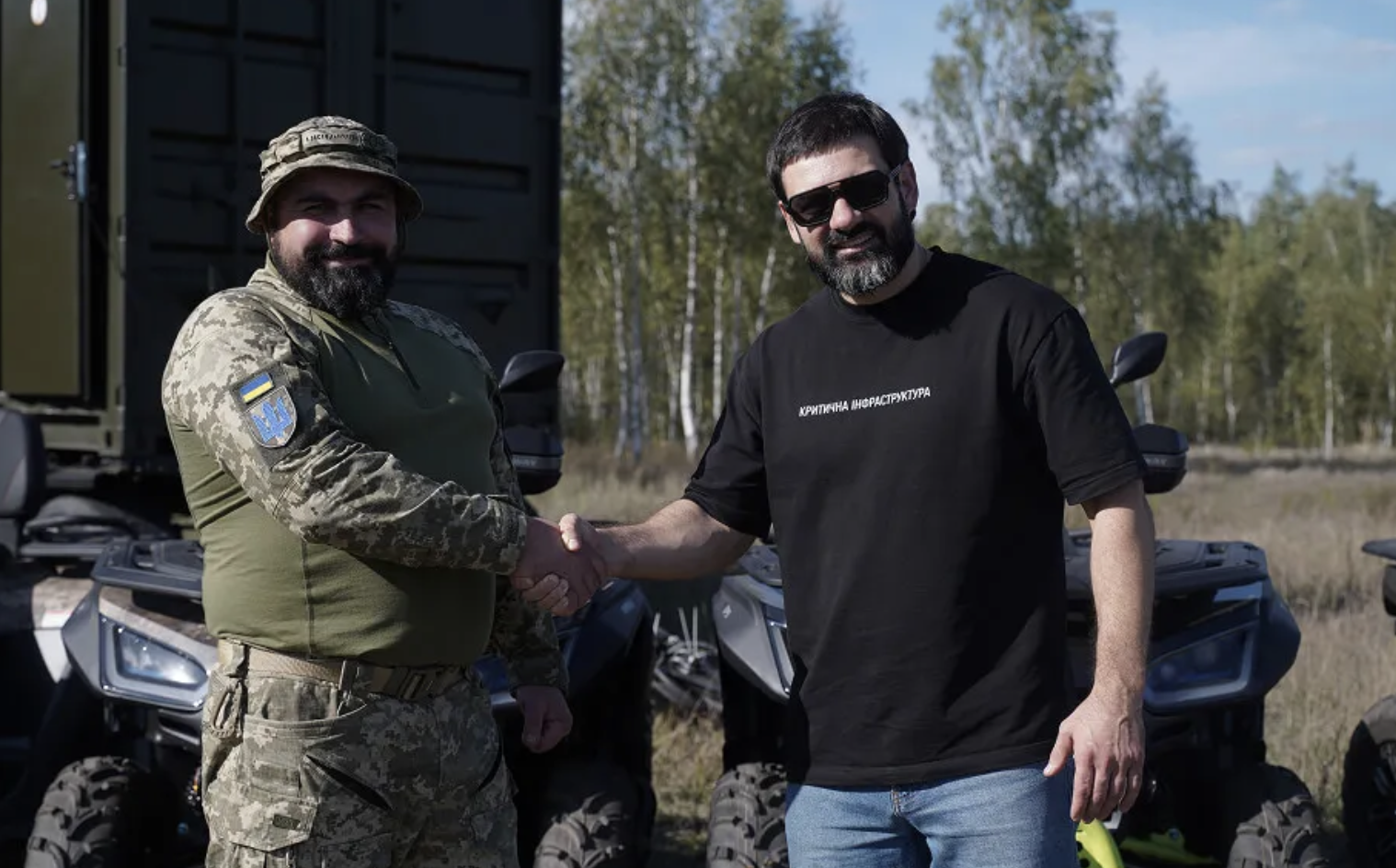
The 157th Separate Mechanized Brigade has received another batch of supplies as part of Rinat Akhmetov’s Steel Front military initiative. This time, the military received seven quad bikes and four mobile shower and bath units.
In my previous column, I wrote about social innovations in Ukraine. Those innovations are part of civic resilience and the democratization of security, which Europe is paying close attention to right now. The EU is trying to work out how to spread responsibility for its own security across society as a whole, rather than leaving it to institutions alone. It is looking for concrete ways to bring ordinary people into the work of defense and resistance.
Petro Poroshenko’s lawyers have appealed to the High Anti-Corruption Court demanding that NABU be obligated to register proceedings regarding the fact of exerting influence on the court and to recognize Petro Poroshenko as a victim in the case of the Deputy Head of the Office of the President, Iryna Mudra, due to her pressure on Supreme Court judges who were considering a lawsuit to overturn sanctions.
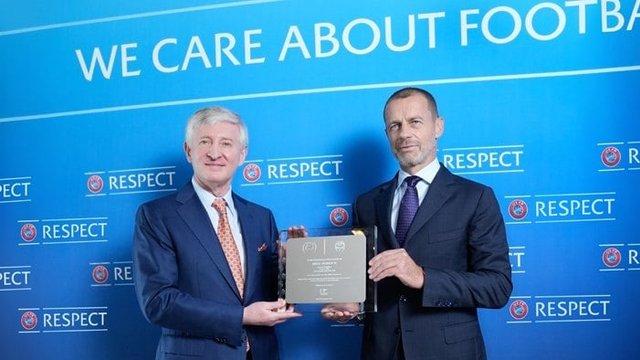
Internationally recognized brands and financial institutions should direct capital to Ukraine now, not waiting for the hostilities to end. This was emphasized by Rinat Akhmetov, president of FC Shakhtar, during a working visit to UEFA headquarters in Nyon, Switzerland, where he met with UEFA President Aleksander Čeferin.