

How Russia Is Trying to Intimidate the World Over the Loss of the CAFFA Vessel
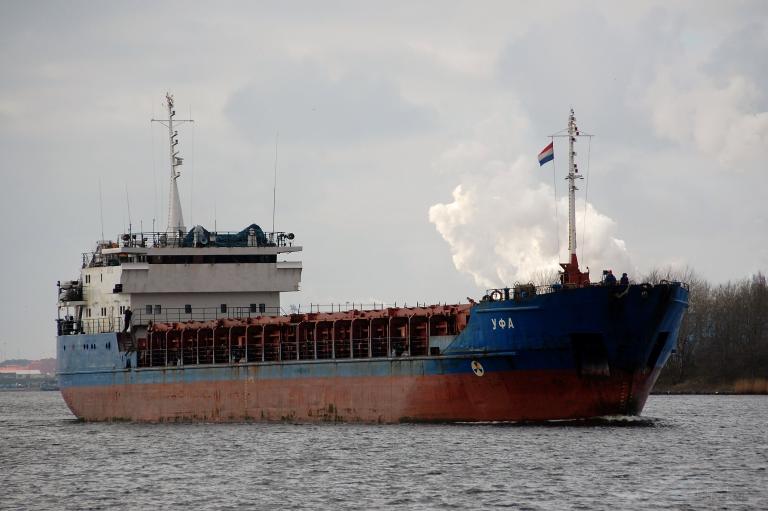
In recent days, Moscow’s official rhetoric has been dominated by hysteria over the decision of the Swedish judiciary, which has finally authorized the transfer of the detained vessel to Ukraine. The Kremlin leadership has grandiosely called the move “piracy” and said that they would decide how to deal with it.
Threats from Moscow
The Russian authorities reacted to the decision of the Supreme Court of Sweden (August 4, 2026) with predictable aggression. Putin personally stated that Russia would “respond in a mirror-like manner to any attempts to seize its merchant vessels”. He called the actions of European countries a “violation of international maritime law,” “piracy and robbery”.
Other Russian officials spoke in the same tone. Deputy Chairman of the Russian Security Council Dmitry Medvedev, true to form, threatened “serious consequences” for foreign companies and states involved in the “seizure of Russian property”.
The Russian Foreign Ministry also did not remain on the sidelines. It issued an official statement, traditionally accusing the West of “destroying the legal foundations of international relations” and promising that “no such case will go unanswered”.
How the Kremlin’s Hysteria Began
The CAFFA vessel was the reason for the diplomatic and media pressure. CAFFA is a dry cargo ship that had long been used to transport looted Ukrainian grain, in particular, by entering the ports in temporarily occupied Crimea.
Ukrainian law enforcement officers qualified the vessel as an instrument of crime, which became the basis for contacting Swedish colleagues within the framework of international legal assistance. On March 6, 2026, the vessel was detained near Trelleborg, Sweden, due to technical violations and a questionable flag.
On March 10, the Swedish Prosecution Authority officially announced the detention of the vessel’s captain, a Russian citizen, who was charged with using forged documents under aggravated circumstances, as well as violations of maritime legislation.
At the same time, the Office of the Prosecutor General of Ukraine, together with the Prosecutor’s Office of the Autonomous Republic of Crimea, opened criminal proceedings, classifying the vessel as an instrument of crime. Ukraine then approached the competent Swedish authorities with a request for international legal assistance, which became the legal basis for the further seizure of the asset and its transfer for the benefit of the Ukrainian investigation.
After Ukraine joined the case, the Swedish judicial system went through the full review process: from the District Court of Ystad to the Scania and Blekinge Court of Appeal; both confirmed the legality of transferring the vessel to Ukraine.
A key point was the Swedish courts’ recognition of “dual criminality”. Swedish law does not contain separate elements of an offense (corpus delicti) identical to liability for the illegal entry of a vessel into a port in a temporarily occupied territory, nor does the Criminal Code of Ukraine. However, the court assessed not only the formal name or legal construction of the Ukrainian corpus delicti, but the actual conduct being investigated by Ukraine.
The Swedish court concluded that the appropriation and removal of property from territory occupied by Russia, as described by Ukraine, could constitute a war crime under Swedish law. The requirement of dual criminality was therefore deemed to have been met: the removal of looted property from territory occupied by Russia was considered by the court to potentially constitute a war crime under Swedish law.
On August 4, 2026, the Supreme Court of Sweden refused permission for further appeal, definitively clearing the way for the transfer of the vessel and the evidence (including copies of documents and digital storage devices) to Ukraine.
Attempts by the Owner to Reclaim CAFFA
The vessel’s owner, Caffa Shipping Limited, whose ultimate beneficial owner is Russia, disagreed with the decision of the court of first instance in Ystad and appealed to the Scania and Blekinge Court of Appeal. The company demanded that the seizure be declared unlawful, that the transfer of the property to Ukraine be fully prohibited, and that the vessel be immediately returned to its owner.
However, on July 3, 2026, the Court of Appeal left the decision of the court of first instance unchanged.
The court also confirmed that the seizure was fully proportionate, taking into account the exceptional seriousness of the crimes being investigated in Ukraine and other circumstances established by the evidence in the case. Thus, after the case went through the second judicial instance, the result remained unchanged: CAFFA can be transferred to Ukraine.
This makes the CAFFA case an example of legal argumentation and a successfully implemented mechanism of international legal assistance that can serve as a model for other countries. A story that began with a Russian-owned vessel carrying looted Ukrainian grain ended with the transfer of the vessel itself, along with evidence to Ukraine to support the implementation of Ukrainian justice.
Why the Kremlin’s Threats Are Just “Noise”
Despite Moscow’s loud statements, the actual state of affairs indicates the opposite. First, European authorities are not detaining vessels flying the Russian flag, but rather violating vessels operating under the flags of third countries, as part of efforts to combat Russia’s so-called “shadow fleet”.
Second, Russia itself remains critically dependent on European shipping. A significant share of the merchant fleet that continues to call at Russian ports is owned by Greek shipowners. Any “mirror measures” by Russia against European vessels would be economic suicide for Russia itself, as they would lead to the complete isolation of its export flows.
The CAFFA case has created a legal precedent. It demonstrated that international legal assistance works and that Russian property involved in crimes is not beyond the reach of the law. It was precisely this realization of its helplessness in the face of lawful judicial decisions that led to the demonstrative reaction from the Russian leadership.
In my previous column, I wrote about social innovations in Ukraine. Those innovations are part of civic resilience and the democratization of security, which Europe is paying close attention to right now. The EU is trying to work out how to spread responsibility for its own security across society as a whole, rather than leaving it to institutions alone. It is looking for concrete ways to bring ordinary people into the work of defense and resistance.
In recent days, Moscow’s official rhetoric has been dominated by hysteria over the decision of…
If you run an online store, restaurant, hotel, law firm, service business, or corporate website, this conversation is about how to stay visible to customers at a time when people are increasingly looking for answers not on Google, but through ChatGPT, Gemini, and other AI services.
In 2025, the deadliest year yet for civilians, Ukraine’s three largest charitable foundations raised a record 105.9 billion hryvnias. It is more than the years 2022–2024 combined. According to the UN, humanitarian aid in Ukraine was delivered by more than 450 organisations, reaching five million people over the course of the year. Civic foundations hold licences to purchase lethal weapons, which is a function states have monopolised for centuries. These record sums were underwritten by international government grants, which means foreign states now channel billions directly through Ukrainian civic funds, bypassing inter-state channels. It is hard to imagine a stronger institutional trust in civil society.
After the start of the full-scale invasion in February 2022, Ukraine witnessed an unprecedented wave of private support for the army. Citizens, big businesses, charitable foundations, and international philanthropists began financing the country’s defense alongside state assistance provided by international partners. Estimates of total private contributions range from tens to hundreds of billions of hryvnias. However, determining the exact amount remains difficult. In many cases, companies combine military aid, humanitarian programs, tax payments, social spending, and employee support in their reporting.