


Government will encourage women to take ‘men’ jobs
Source: Ukraine’s economy ministry
The Ministry of Economy articulated the need to focus on retraining programs for Ukrainians in professions with maximum demand. In particular, it is about women who can master ‘men’ professions.
Ukraine and the European Bank for Reconstruction and Development have started a dialogue regarding the development and implementation of business support programs for the recovery of the energy sector and retraining of workers for professions that are more needed in the labor market.
During the meeting with the President of the EBRD, Odile Renaud-Basso, the Minister of Economy, Yulia Svyrydenko, noted that there are currently two critically important challenges for the Ukrainian economy: energy problems and lack of labor force.
Another important challenge for the economy is the conscription of specialists to the ranks of the Armed Forces.
‘We now need to pay more attention to retraining programs for Ukrainians in professions that are in maximum demand. First of all, we are talking about women who are already mastering once purely ‘men’ professions,’ Svyrycenko explained.
In my previous column, I wrote about social innovations in Ukraine. Those innovations are part of civic resilience and the democratization of security, which Europe is paying close attention to right now. The EU is trying to work out how to spread responsibility for its own security across society as a whole, rather than leaving it to institutions alone. It is looking for concrete ways to bring ordinary people into the work of defense and resistance.
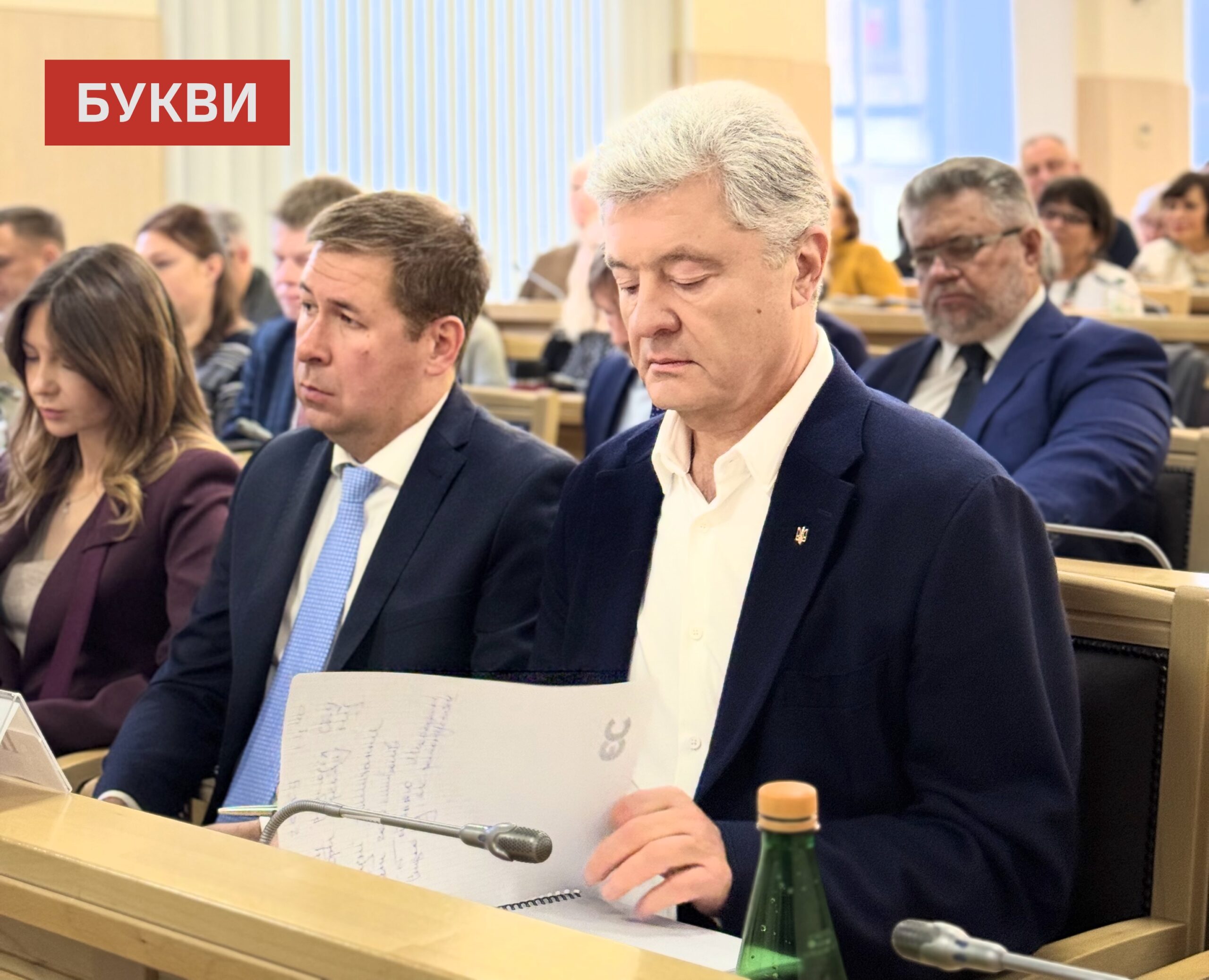
Petro Poroshenko’s lawyers have appealed to the High Anti-Corruption Court demanding that NABU be obligated to register proceedings regarding the fact of exerting influence on the court and to recognize Petro Poroshenko as a victim in the case of the Deputy Head of the Office of the President, Iryna Mudra, due to her pressure on Supreme Court judges who were considering a lawsuit to overturn sanctions.
Internationally recognized brands and financial institutions should direct capital to Ukraine now, not waiting for the hostilities to end. This was emphasized by Rinat Akhmetov, president of FC Shakhtar, during a working visit to UEFA headquarters in Nyon, Switzerland, where he met with UEFA President Aleksander Čeferin.
In recent days, Moscow’s official rhetoric has been dominated by hysteria over the decision of…
In 2025, the deadliest year yet for civilians, Ukraine’s three largest charitable foundations raised a record 105.9 billion hryvnias. It is more than the years 2022–2024 combined. According to the UN, humanitarian aid in Ukraine was delivered by more than 450 organisations, reaching five million people over the course of the year. Civic foundations hold licences to purchase lethal weapons, which is a function states have monopolised for centuries. These record sums were underwritten by international government grants, which means foreign states now channel billions directly through Ukrainian civic funds, bypassing inter-state channels. It is hard to imagine a stronger institutional trust in civil society.