
Ukraine’s approval on exhuming Polish graves of WW2 events critisized by historian
Source: Volodymyr Birchak
The recent decision of Ukraine’s government allowing Poland to exhume victims of the WW2 Volyn tragedy received a mixed reaction in the country .Ukrainian historian and military officer Volodymyr Birchak offered his judgement on the controversial move.
The historian who chairs academic programs at the Center for Liberation Movement Studies began by recalling November 1918, when Polish forces entered Lviv and instigated a Jewish pogrom. “That’s why, in the first Polish-Ukrainian war, many Jewish soldiers joined the Galician Army. There was even a special battalion called the Jewish Shock Battalion,” he explained.
The historian also pointed to Poland’s occupation of Eastern Galicia at that time, noting that the term “occupation” appeared in many orders from Polish commanders. He questioned the legitimacy of Poland’s claim to this territory.
“What right did they have to it? None! The Western Ukrainian People’s Republic (ZUNR), established in 1918, covered about 70,000 square kilometers with a population of 6 million—71% Ukrainians, 14% Poles, and 13% Jews,” Birchak said. “Jews or Poles might have laid claim to their own states here, but let’s be clear—71% were Ukrainians. So, wasn’t it their land?”
He also detailed how Poland worked to suppress Ukrainian culture during its occupation of Eastern Galicia. He mentioned how the interwar Polish government sought to assimilate Ukrainians, citing then interior minister Bronisław Pieracki’s plans for complete assimilation.
“Even in peacetime, they brought troops into Eastern Galicia under the pretext of ‘pacification,’ claiming sabotage by the Organization of Ukrainian Nationalists (OUN), which never really happened,” he said. “At most, 10-15 haystacks were burned across Galicia and Volyn. But Poland exaggerated this and sent in troops, destroying anything remotely Ukrainian-[looking], arresting around 2,000 people, and conducting over 5,000 searches.”
Birchak also pointed out the Polish government efforts to put restrictions on the use of the Ukrainian language. “In 1923, Volyn had 442 Ukrainian schools. By 1927, under Polish rule, only two remained,” he noted.
Birchak didn’t shy away from addressing Poland’s complicated position in the 1930s. “Did you know that 1930s Poland was closer to Nazis and fascists than to Western European democracy?” he asked, pointing to Poland’s participation in dividing Czechoslovakia after the Munich Agreement and the Vienna Arbitration.
He also criticized Poland’s collaboration with Hungary, which ended up in the attack on Carpathian Ukraine, part of Czechoslovakia at the time.
“By 1939, Poland tried to play innocent victims. But come on, you weren’t saints in interwar Europe. Far from it—you were closer to the dark and fiery end of the spectrum,” Birchak remarked.
Birchak vented his frustration over the perspective on the Volyn Tragedy , arguing it was part of the broader Polish-Ukrainian conflict during WWII.
“Why focus only on Volyn and 1943? The second Polish-Ukrainian war didn’t start there or then. It began in 1942, on Ukrainian ethnic territories now part of Poland, with attacks by the Polish underground on Ukrainian farmers,” he said.
He acknowledged the fact that both sides commited atrocities but criticized the selective memory surrounding the events. Birchak cited a passage from the memories of Polish underground fighter, Stefan Desky, who admitted to the rape of a Ukrainian girl “simply because she was Ukrainian.”
“Today, Poland positions itself as the greatest victim of WWII, especially when it comes to Ukrainians, always pointing to Volyn,” Birchak said.
Birchak claims the issue of exhumation of the Volyn events’ victims is now used as part of election campaign in Poland. “They’re playing the Volyn card to score political points. And they’ve achieved their goal. Yesterday, Ukraine’s Foreign Minister announced that exhumation of ‘Volyn Tragedy’ victims would be allowed,” he noted.
He also pointed out the reason Ukraine had eariler imposed a moratorium on such exhumations: “Poles destroyed over 15,000 graves and monuments to Ukrainians on their territory. Ukraine demanded they restore them. Did they? No!”
Birchak didn’t mince words in criticizing Ukrainian politicians for their decision. “Some spineless officials gave in, and others are celebrating this disgrace,” he concluded.
Amendments to Ukraine’s enforcement proceedings legislation, initiated by the Ministry of Justice of Ukraine, have entered into force. Among other measures, the reform provides for the automated lifting of attachments on bank accounts immediately after debts in enforcement proceedings have been fully settled. The main practical benefit for citizens is the complete elimination of the need to contact an enforcement officer in person and wait for paper decisions once the debt has been paid.
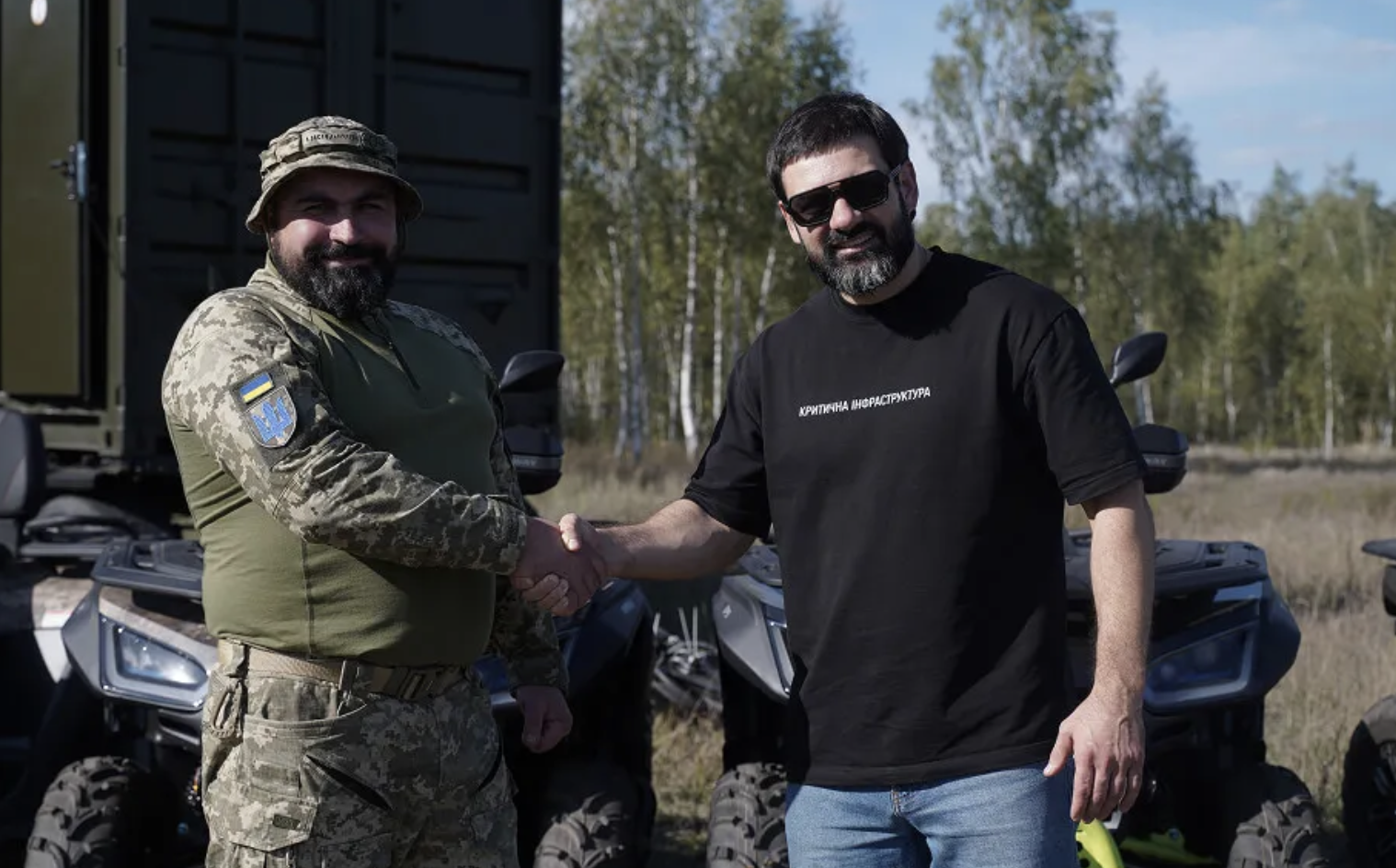
The 157th Separate Mechanized Brigade has received another batch of supplies as part of Rinat Akhmetov’s Steel Front military initiative. This time, the military received seven quad bikes and four mobile shower and bath units.
In my previous column, I wrote about social innovations in Ukraine. Those innovations are part of civic resilience and the democratization of security, which Europe is paying close attention to right now. The EU is trying to work out how to spread responsibility for its own security across society as a whole, rather than leaving it to institutions alone. It is looking for concrete ways to bring ordinary people into the work of defense and resistance.
Petro Poroshenko’s lawyers have appealed to the High Anti-Corruption Court demanding that NABU be obligated to register proceedings regarding the fact of exerting influence on the court and to recognize Petro Poroshenko as a victim in the case of the Deputy Head of the Office of the President, Iryna Mudra, due to her pressure on Supreme Court judges who were considering a lawsuit to overturn sanctions.
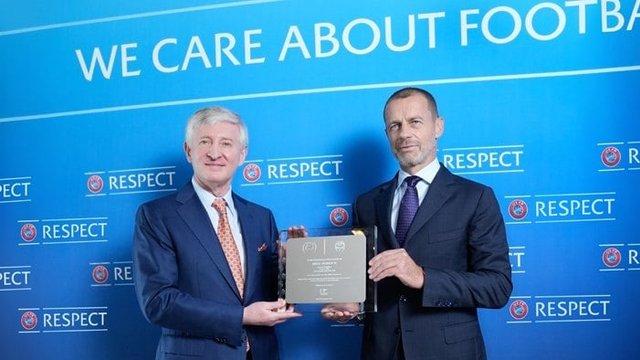
Internationally recognized brands and financial institutions should direct capital to Ukraine now, not waiting for the hostilities to end. This was emphasized by Rinat Akhmetov, president of FC Shakhtar, during a working visit to UEFA headquarters in Nyon, Switzerland, where he met with UEFA President Aleksander Čeferin.