

Education ministry launches probe into textbook price scandal
Source: Ukraine’s ministry of education
Ukraine’s education ministry officials are left blushing after media reports made them revoke the state contracts that could see the ministry buy textbooks for schools at inflated prices. The probe focuses on the Institute of Modernization of Education Content, which avoided regular tender procedures to award lavish books contracts to Kharkiv’s Atlant publishing house.
According to the ministry, the institute is now under scrutiny following a public outcry over the pricing scandal.
“We have received information that the Institute of Modernization of Education Content, which is responsible for organizing expert evaluations and purchasing textbooks, signed an agreement to purchase textbooks at an inflated price. We strictly adhere to anti-corruption principles, and we are grateful to the media representatives for drawing attention to possible violations. We will definitely report on the results of the service investigation,” the ministry said in a statement on social media.
Recent revelations by NGL.Media found that the Institute signed 83 contracts with Atlant for nearly 163 million hryvnias without competitive bidding. Comparisons with other printing houses prices suggest that Atlant’s pricing was double the market rate. -Atlant charged 455 hryvnias for prining a copy of the textbook that would normally cost 109 hryvnias at most.
In recent days, Moscow’s official rhetoric has been dominated by hysteria over the decision of…
In 2025, the deadliest year yet for civilians, Ukraine’s three largest charitable foundations raised a record 105.9 billion hryvnias. It is more than the years 2022–2024 combined. According to the UN, humanitarian aid in Ukraine was delivered by more than 450 organisations, reaching five million people over the course of the year. Civic foundations hold licences to purchase lethal weapons, which is a function states have monopolised for centuries. These record sums were underwritten by international government grants, which means foreign states now channel billions directly through Ukrainian civic funds, bypassing inter-state channels. It is hard to imagine a stronger institutional trust in civil society.
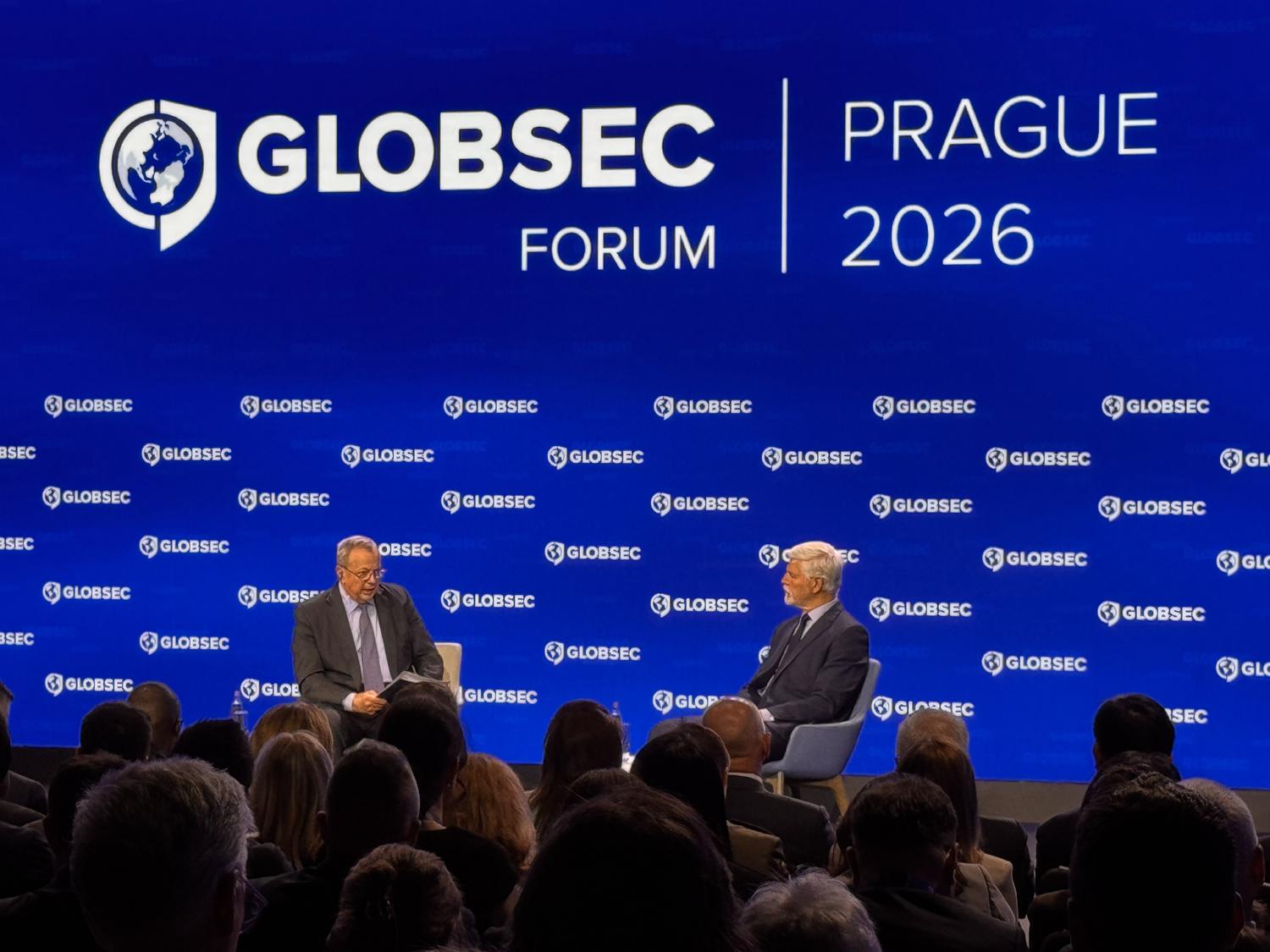
During the GLOBSEC Defence Forum 2026 in Prague, representatives of “Steel Front”, an initiative by Rinat Akhmetov, discussed with NATO delegations, military officials, and representatives of the European defense industry the lessons learned from Russia’s full-scale war against Ukraine.
After the start of the full-scale invasion in February 2022, Ukraine witnessed an unprecedented wave of private support for the army. Citizens, big businesses, charitable foundations, and international philanthropists began financing the country’s defense alongside state assistance provided by international partners. Estimates of total private contributions range from tens to hundreds of billions of hryvnias. However, determining the exact amount remains difficult. In many cases, companies combine military aid, humanitarian programs, tax payments, social spending, and employee support in their reporting.
Rinat Akhmetov’s military initiative, “Steel Front”, has delivered a batch of drones worth UAH 214 million to the 1st “Azov” Corps of the National Guard of Ukraine. This shipment is part of the Metinvest Group’s ongoing support for the unit in 2025.