

European Solidarity MPs offer amendments to state budget to increase military expanses
Source: European Solidarity party
In a bid to increase the country’s military expenses, the “European Solidarity” party has introduced 114 amendments to Ukraine’s 2025 state budget that can allocate additional funding of 258.9 billion hryvnias, according to MP Nina Yuzhanina. The party calls to prioritze the army needs offering to earmark:
- 236.5 billion hryvnias for Ukraine’s Ministry of Defense, focusing on the development, purchase, modernization, and repair of military equipment, arms, and other essential resources.
- 20.8 billion hryvnias for the needs of military units within the Armed Forces of Ukraine and other military formations.
- 1.6 billion hryvnias to maintain funding for the “New Ukrainian School” program at its current level.
“European Solidarity” outlined several revenue sources that will cover this spending. They inclued:
- 65.6 billion hryvnias from extra tax revenues, with specific measures like:
- Raising the tax rate on gambling operators, lottery operators, and winnings to 50%, which would bring in 30 billion hryvnias.
- Increasing excise tax rates on tobacco products, expected to yield 21.6 billion hryvnias.
- Revising rent rates for natural gas extraction in line with market conditions and adjusting the taxation of new wells, generating 14 billion hryvnias.
- 99.6 billion hryvnias through cuts in government programs, including:
- 42.2 billion hryvnias from reductions in road construction.
- 10.1 billion hryvnias by adjusting government payroll expenses to 2024 levels.
In addition, the party said it would be make sense to redistribute 93.7 billion hryvnias from military-related personal income taxes (PIT), directing 70% to the Ministry of Defense and 30% to military units, instead of the current distribution to other agencies.
In my previous column, I wrote about social innovations in Ukraine. Those innovations are part of civic resilience and the democratization of security, which Europe is paying close attention to right now. The EU is trying to work out how to spread responsibility for its own security across society as a whole, rather than leaving it to institutions alone. It is looking for concrete ways to bring ordinary people into the work of defense and resistance.
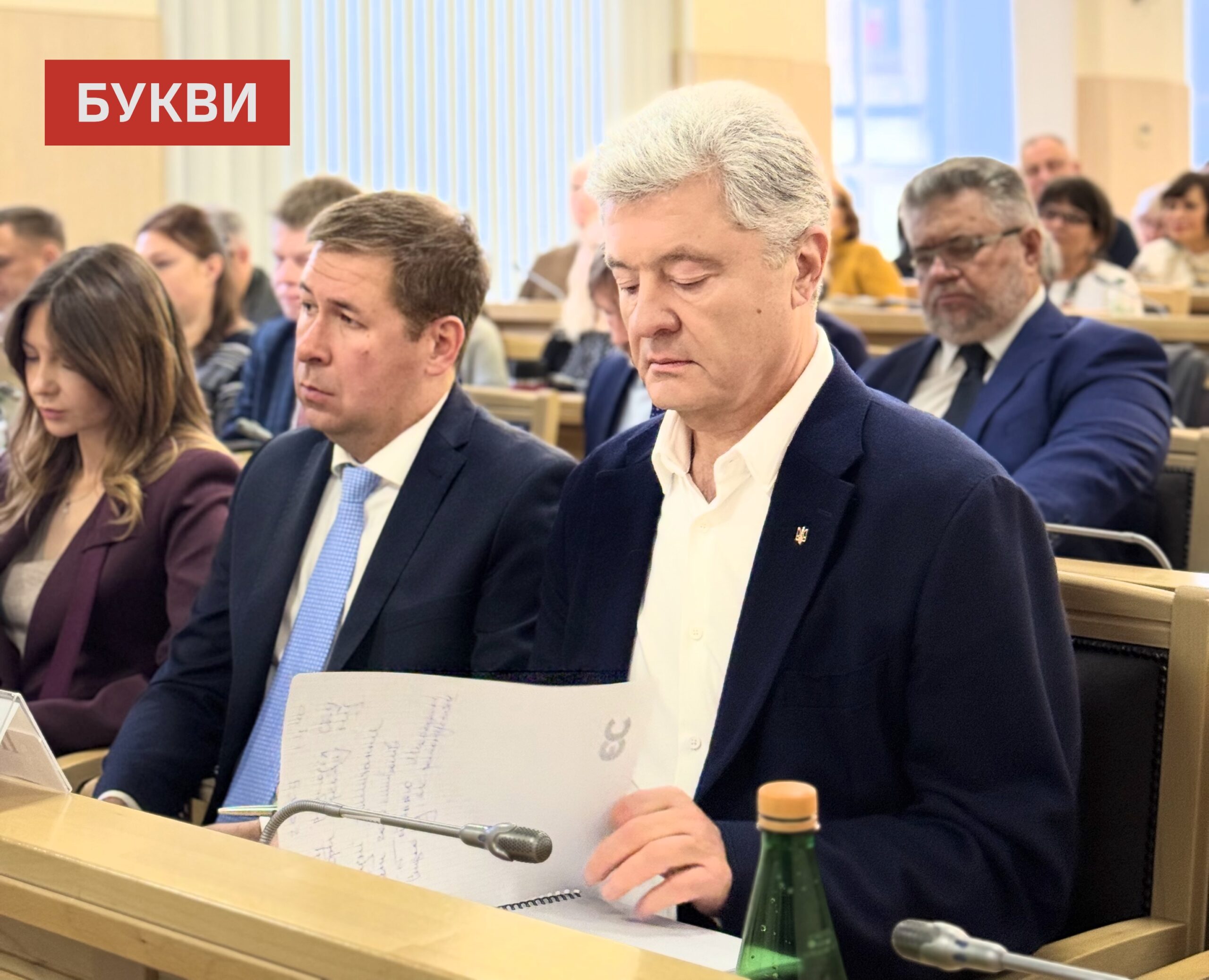
Petro Poroshenko’s lawyers have appealed to the High Anti-Corruption Court demanding that NABU be obligated to register proceedings regarding the fact of exerting influence on the court and to recognize Petro Poroshenko as a victim in the case of the Deputy Head of the Office of the President, Iryna Mudra, due to her pressure on Supreme Court judges who were considering a lawsuit to overturn sanctions.
Internationally recognized brands and financial institutions should direct capital to Ukraine now, not waiting for the hostilities to end. This was emphasized by Rinat Akhmetov, president of FC Shakhtar, during a working visit to UEFA headquarters in Nyon, Switzerland, where he met with UEFA President Aleksander Čeferin.
In recent days, Moscow’s official rhetoric has been dominated by hysteria over the decision of…
In 2025, the deadliest year yet for civilians, Ukraine’s three largest charitable foundations raised a record 105.9 billion hryvnias. It is more than the years 2022–2024 combined. According to the UN, humanitarian aid in Ukraine was delivered by more than 450 organisations, reaching five million people over the course of the year. Civic foundations hold licences to purchase lethal weapons, which is a function states have monopolised for centuries. These record sums were underwritten by international government grants, which means foreign states now channel billions directly through Ukrainian civic funds, bypassing inter-state channels. It is hard to imagine a stronger institutional trust in civil society.