

Poroshenko donates 3 electornic warfare systems to Ukrainian troops
 Source: “European Solidarity”
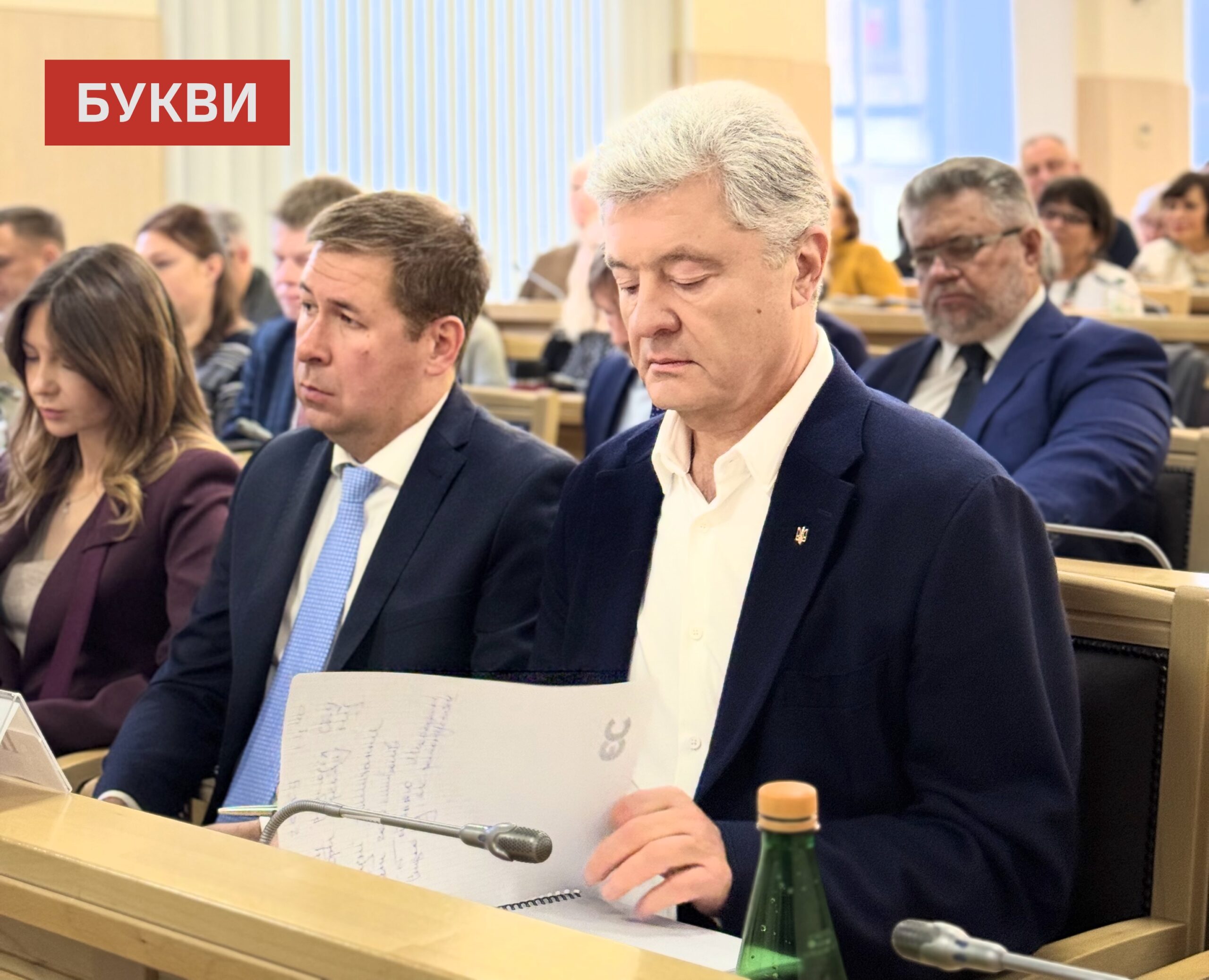
In another boost to Ukraine’s defense capabilities, former Ukrainian president and European Solidarity party leader Petro Poroshenko has given three advanced “Ai-Petri SV” electronic warfare systems to a military unit fighting in the southern Ukraine.
“Just three days ago, we delivered two systems to the 206th Artillery Brigade of the Ukrainian Navy. Today, we’re transferring three more to the Southern Command. Our goal is to ramp up production to record levels, doing everything possible to ensure our soldiers are equipped,” Poroshenko said.

The “Ai-Petri SV” electronic warfare systems are designed to frustrate attacks of the Russian drones like Lancet and Orlan, and even can be used against guided bombs. Poroshenko praised the’ effectiveness of this counter-reconnaissance system.
“To protect as many lives as possible, we’re scaling up production of these counter-reconnaissance and technical countermeasure systems. Our aim is to better shield the front lines where our infantry and artillery operate,” Poroshenko explained.
Each unit comes fully equipped with support vehicles, including pickups outfitted with six-band electronic warfare devices, charging stations, generators, and Starlink communication systems.
The “Ai-Petri” project has already attracted over 200 million hryvnias in private investments, which means it has good prospects for further development.
“This isn’t just electronic warfare; it’s cutting-edge cybersecurity with unique capabilities developed by our team of programmers and engineers. There’s nothing like it in the Ukrainian Armed Forces or even on the enemy’s side. We’ve already established serial production,” Poroshenko noted proudly.
In my previous column, I wrote about social innovations in Ukraine. Those innovations are part of civic resilience and the democratization of security, which Europe is paying close attention to right now. The EU is trying to work out how to spread responsibility for its own security across society as a whole, rather than leaving it to institutions alone. It is looking for concrete ways to bring ordinary people into the work of defense and resistance.
Petro Poroshenko’s lawyers have appealed to the High Anti-Corruption Court demanding that NABU be obligated to register proceedings regarding the fact of exerting influence on the court and to recognize Petro Poroshenko as a victim in the case of the Deputy Head of the Office of the President, Iryna Mudra, due to her pressure on Supreme Court judges who were considering a lawsuit to overturn sanctions.
Internationally recognized brands and financial institutions should direct capital to Ukraine now, not waiting for the hostilities to end. This was emphasized by Rinat Akhmetov, president of FC Shakhtar, during a working visit to UEFA headquarters in Nyon, Switzerland, where he met with UEFA President Aleksander Čeferin.
In recent days, Moscow’s official rhetoric has been dominated by hysteria over the decision of…
In 2025, the deadliest year yet for civilians, Ukraine’s three largest charitable foundations raised a record 105.9 billion hryvnias. It is more than the years 2022–2024 combined. According to the UN, humanitarian aid in Ukraine was delivered by more than 450 organisations, reaching five million people over the course of the year. Civic foundations hold licences to purchase lethal weapons, which is a function states have monopolised for centuries. These record sums were underwritten by international government grants, which means foreign states now channel billions directly through Ukrainian civic funds, bypassing inter-state channels. It is hard to imagine a stronger institutional trust in civil society.