


Zelensky press conference: key notes
Source: Bukvy
On December 19, president Volodymyr Zelensky gave a two-hour press conference, during which he answered a number of journalists’ questions, in particular, regarding the situation at the front, assistance from Western allies, the upcoming counteroffensive, and the need for further mobilization.
Bukvy offers key notes of the press conference.
- Drones: Ukraine plans to produce a million drones next year.
- Army: Military officials suggest further mobilization of up to 450,000 people.
- Russia’s goals: Russia has not achieved results on the battlefield this year.
- Prisoners of war: The work is underway to return a ‘significant part’ of prisoners of war held by Russia.
- Popularity: When asked if he is losing support among Ukrainians, Zelensky noted that it is ‘normal’ for the population to decide whether they like the way he serves Ukraine.
- Trump: If former US President Donald Trump wins the election in the United States, his ‘first signals’ to Ukraine will have a ‘very significant impact’ on the war.
- Israel-Hamas: the war in the Middle East definitely does not have a positive effect on Ukraine.
- Border blockade: Commenting on the situation on the Ukrainian-Polish border, president Zelensky said that he hopes the new Polish government will unblock the checkpoints.
- Negotiations: Russia has shown no desire to negotiate, only ‘an insolent willingness to kill’.
- Victory: Ukraine will consider the liberation of Crimea and the entire Donbas a victory in a full-scale war.
- Failure: Zelensky denied that Ukraine is on the verge of losing the war.
- Mobilization: The president announced that he is not going to sign the law on the mobilization of women.
- Conflict: Zelensky did not respond to a question about whether he plans to dismiss Valerii Zaluzhnyi and stated that he has a working relationship with Zaluzhnyi.
- Future counteroffensive: Zelensky explained that there were difficulties in the South because for months, everyone had been talking about where we were going.
- Western aid: Zelensky announced the amount of aid: Belgium — 1.7 billion, Denmark — 4.2 billion, Korea — 2.3 billion, Latvia, Lithuania, the Netherlands — hundreds of millions, Norway — 7.5 billion, France — 2billion, Germany — 8 billion, Sweden — 0.5 billion, Japan — several billion.
- USA: The president xpressed confidence in the continued arrival of aid from the USA.
- NATO: Ukraine is not yet invited to the Alliance.
- Air defense: This winter is full of challenges. Several new Patriot systems will protect Ukraine from Russian missiles.
In my previous column, I wrote about social innovations in Ukraine. Those innovations are part of civic resilience and the democratization of security, which Europe is paying close attention to right now. The EU is trying to work out how to spread responsibility for its own security across society as a whole, rather than leaving it to institutions alone. It is looking for concrete ways to bring ordinary people into the work of defense and resistance.
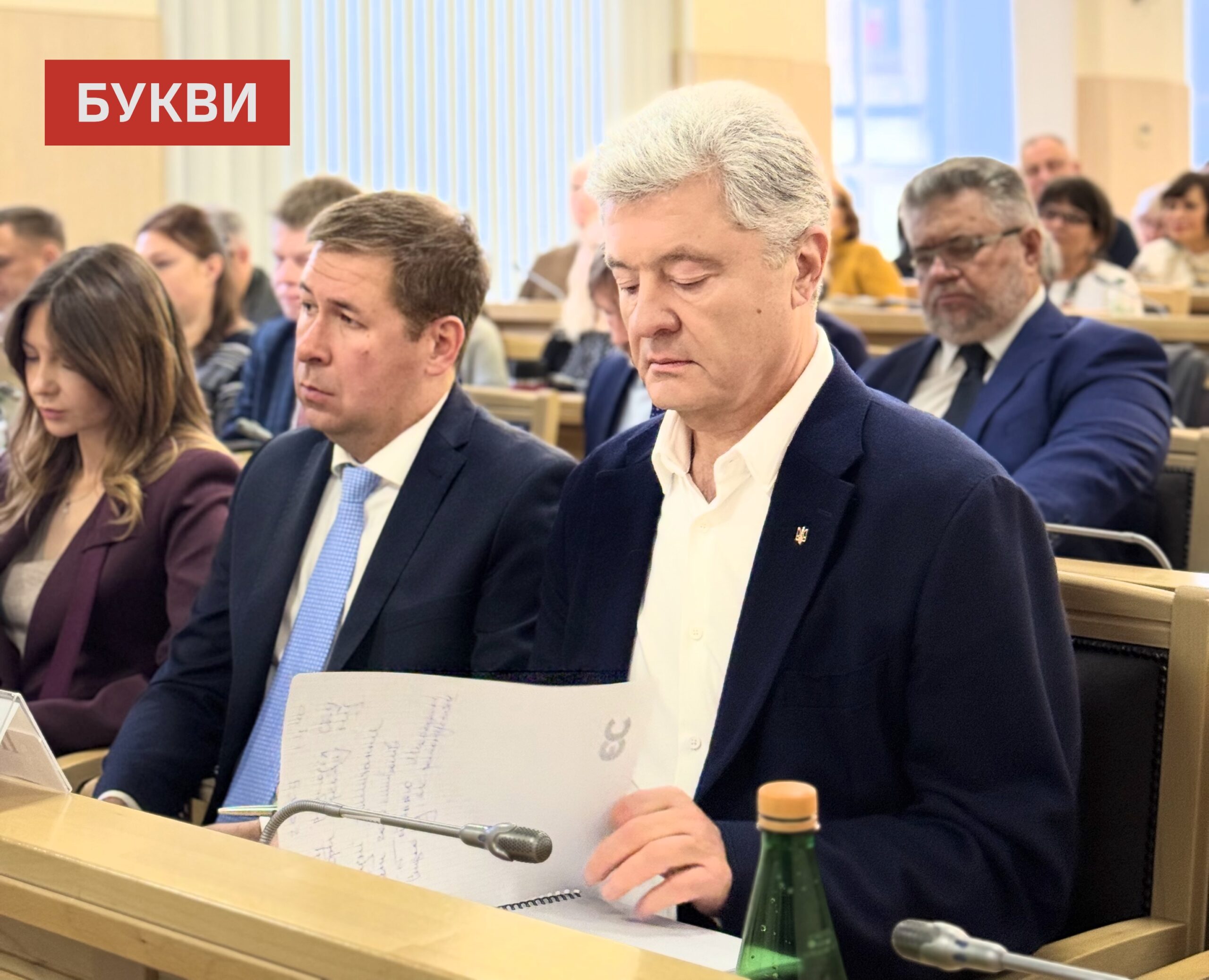
Petro Poroshenko’s lawyers have appealed to the High Anti-Corruption Court demanding that NABU be obligated to register proceedings regarding the fact of exerting influence on the court and to recognize Petro Poroshenko as a victim in the case of the Deputy Head of the Office of the President, Iryna Mudra, due to her pressure on Supreme Court judges who were considering a lawsuit to overturn sanctions.
Internationally recognized brands and financial institutions should direct capital to Ukraine now, not waiting for the hostilities to end. This was emphasized by Rinat Akhmetov, president of FC Shakhtar, during a working visit to UEFA headquarters in Nyon, Switzerland, where he met with UEFA President Aleksander Čeferin.
In recent days, Moscow’s official rhetoric has been dominated by hysteria over the decision of…
In 2025, the deadliest year yet for civilians, Ukraine’s three largest charitable foundations raised a record 105.9 billion hryvnias. It is more than the years 2022–2024 combined. According to the UN, humanitarian aid in Ukraine was delivered by more than 450 organisations, reaching five million people over the course of the year. Civic foundations hold licences to purchase lethal weapons, which is a function states have monopolised for centuries. These record sums were underwritten by international government grants, which means foreign states now channel billions directly through Ukrainian civic funds, bypassing inter-state channels. It is hard to imagine a stronger institutional trust in civil society.