

Russian intelligence recruit Ukrainian minors for arsons of military vehicles -reports

Source: Skhemy 

Russian intelligence services appear to use a new sabotage tactics recruiting Ukrainian minors to set fire to military vehicles and military recruitment offices. The scheme uses a netwo of chat bots and Telegram channels where teenagers take the bait when offered “quick cash” for arson acts.

The report by Skhemy reveals the great number of young Ukrainians roped into this operation. The journalistic report features interviews with minors apprehended by the SBU (Security Service of Ukraine) and National Police, as well as direct contact with the Russian handlers.

Recruitment follows a common pattern: potential arsonists, mostly teenagers, stumble upon odd jobs lists on Telegram where they are offered a good reward for torching Ukrainian Railways equipment, military vehicles and offices. Teens are often tasked with setting a fire to vehicles “with crosses or green with black plates,” according to coordinators. Once a target is located and approved, detailed arson instructions follow, and the perpetrator must send a video of the act as proof.

Since May 2024, over 150 individuals have been arrested for setting military vehicles ablaze, many of them minors, as Russian handlers see no problem in recruitment of under-18s for the sabotage acts.

Rewards for such assignments range from a few hundred to several thousand dollars that are promised to be transfered via cryptocurrency or Ukrainian bank cards. Many youths fall into this trap often ending up with no reward at all.

One of Russian handlers allegedly claimed that the payments come from “state funds,” presumably meaning Russian state funding. The goal of arsons is to “create a visual spectacle of chaos and destabilize Ukraine”.

The sabotage campaign often sees call center clerks acting as  middlemen between the Russian intelligence and the recruited Ukrainians. Investigation suggests that the notorious 316th Intelligence Center of Russia’s General Staff, known as the GRU, could be behind this plot.

Analysis of various Telegram groups proves that such schemes originate in Russia with most such Telegram channels acting in a coordinated effort, using the same posts and strategies.

In my previous column, I wrote about social innovations in Ukraine. Those innovations are part of civic resilience and the democratization of security, which Europe is paying close attention to right now. The EU is trying to work out how to spread responsibility for its own security across society as a whole, rather than leaving it to institutions alone. It is looking for concrete ways to bring ordinary people into the work of defense and resistance.

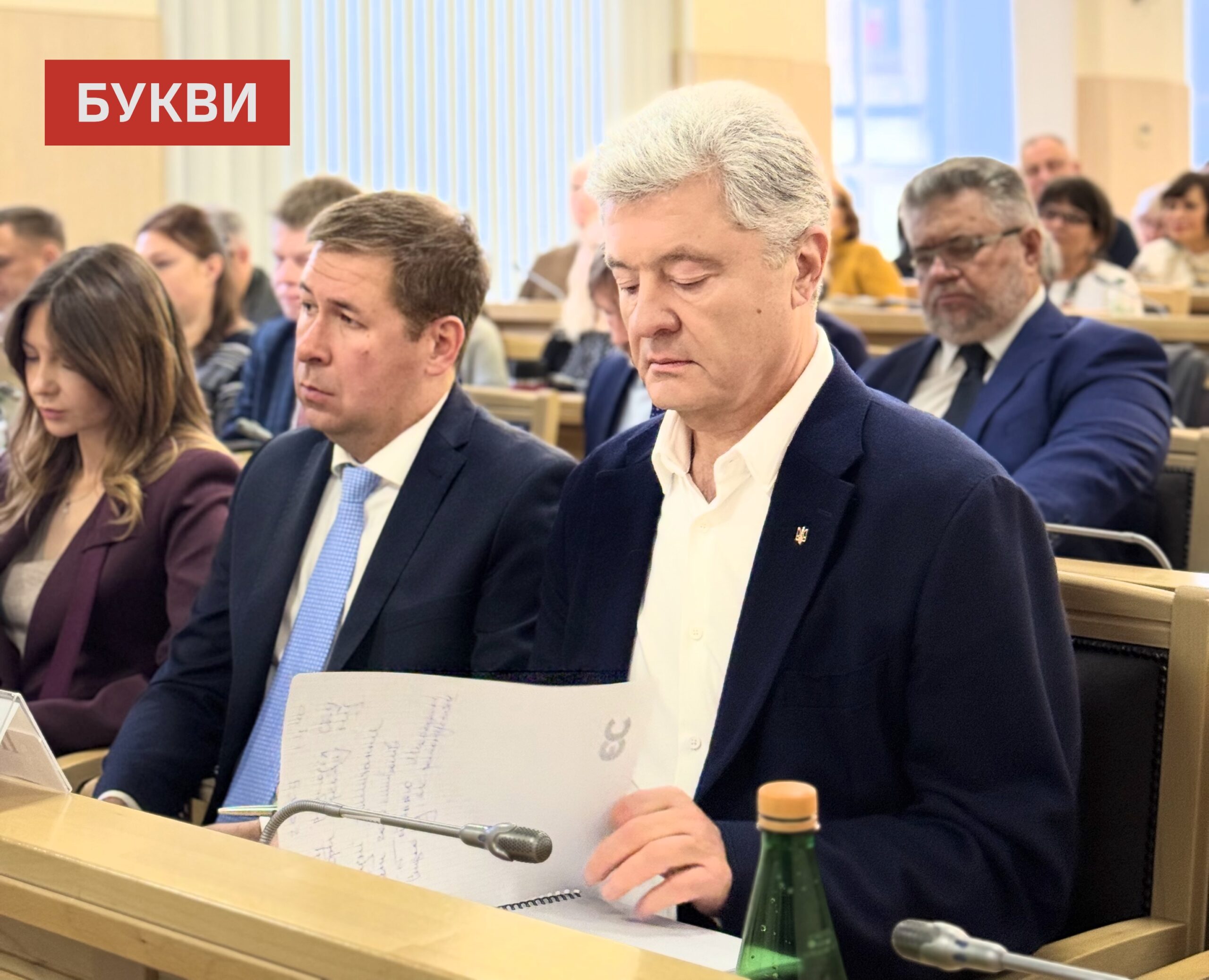
Petro Poroshenko’s lawyers have appealed to the High Anti-Corruption Court demanding that NABU be obligated to register proceedings regarding the fact of exerting influence on the court and to recognize Petro Poroshenko as a victim in the case of the Deputy Head of the Office of the President, Iryna Mudra, due to her pressure on Supreme Court judges who were considering a lawsuit to overturn sanctions.

Internationally recognized brands and financial institutions should direct capital to Ukraine now, not waiting for the hostilities to end. This was emphasized by Rinat Akhmetov, president of FC Shakhtar, during a working visit to UEFA headquarters in Nyon, Switzerland, where he met with UEFA President Aleksander Čeferin.

In recent days, Moscow’s official rhetoric has been dominated by hysteria over the decision of…

In 2025, the deadliest year yet for civilians, Ukraine’s three largest charitable foundations raised a record 105.9 billion hryvnias. It is more than the years 2022–2024 combined. According to the UN, humanitarian aid in Ukraine was delivered by more than 450 organisations, reaching five million people over the course of the year. Civic foundations hold licences to purchase lethal weapons, which is a function states have monopolised for centuries. These record sums were underwritten by international government grants, which means foreign states now channel billions directly through Ukrainian civic funds, bypassing inter-state channels. It is hard to imagine a stronger institutional trust in civil society.