

“We will do everything to reach borders of 1991”, -Ukraine’s commander-in-chief
Source: Guardian
Ukraine’s commander-in-chief Olesksandr Syrskyi gave a rare interview to ‘Guardian’ where he discussed the frontline situation, mobilization efforts, and revealed the ultimate goal of the Ukrainian army.
Syrskyi, who has been in his role since February 2024, admitted that Ukraine is dealing with the big and still powerful enemy. “Russia still has far superior resources,” he said. “They have more of everything: tanks, infantry fighting vehicles, soldiers. Their original 100,000-strong invasion force has grown to 520,000.”
According to Ukraine’s estimates, the number of Russian tanks has doubled from 1,700 to 3,500, artillery systems have tripled, and armored personnel carriers have nearly doubled from 4,500 to 8,900.
“The enemy has a significant advantage in force and resources,” Syrskyi said. “Therefore, for us, the issue of supply, the issue of quality, is really at the forefront.”
Ukraine has to spread its forces after Russian renewed its offensive in Kharkiv, but the commander-in-chief is still optimistic.
“Could Russia’s advance be halted? “Yes, of course. First of all, it depends on our brave soldiers, our officers.”
The general also praised the resilience and heroism of Ukrainian units, who are facing larger Russian formations.. “Russian casualties are three times higher than ours, and in some areas, even more,” Syrskyi explained.
Russia’s gains are “tactical” and prove costly for its army, said Syrsky, adding they are “three times” higher than Ukraine’s, and “even more” in certain directions whereas Ukraine follows a different approach: “It’s very important for us to save the lives of our soldiers. We don’t defend ruins to the death”.
Syrskyi is positive that arrival of F-16 fighter jets will boost Ukraine’s air defenses. “I know when the F-16s will arrive, but unfortunately, I cannot disclose that information,” he said adding that they wouldn’t be deployed closer than 40 kilometers from the front line as they could be obviously hunted by Russian forces.
Ukraine continues to make the most of combat drones that allow operations within Russia.
“We fight not by quantity but quality,” he said, adding that drones played “as big a role as artillery”.
Syrskiy admitted the Kerch road and rail crossing remains one of the key targets in Crimea, as Ukraine is set to ‘deoccupy’ the occupied peninsula. “We will do everything possible to return to the internationally recognized borders of 1991. We must win… to liberate our citizens suffering in occupied territories,” he stressed.
The general also used the interview as a chance to appeal to conscience of the Ukrainian men who avoided the draft by moving to another countries. “It is very important for all Ukrainian citizens to fulfill their constitutional obligations,” he said. “I hope that after the victory, they will be able to tell their children where they were. Where were you when all Ukrainian citizens were fighting in such fierce battles? That is the question.”
In my previous column, I wrote about social innovations in Ukraine. Those innovations are part of civic resilience and the democratization of security, which Europe is paying close attention to right now. The EU is trying to work out how to spread responsibility for its own security across society as a whole, rather than leaving it to institutions alone. It is looking for concrete ways to bring ordinary people into the work of defense and resistance.
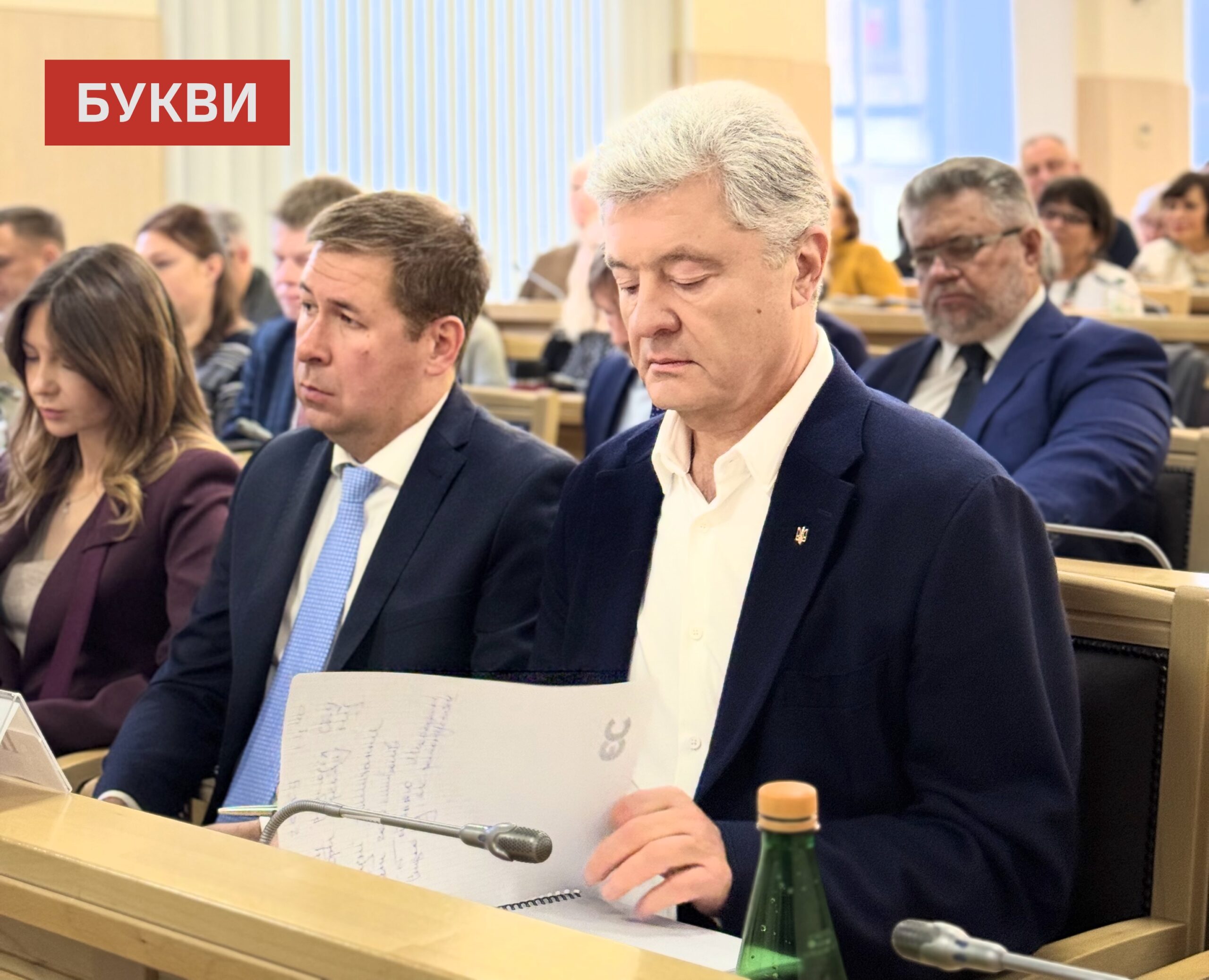
Petro Poroshenko’s lawyers have appealed to the High Anti-Corruption Court demanding that NABU be obligated to register proceedings regarding the fact of exerting influence on the court and to recognize Petro Poroshenko as a victim in the case of the Deputy Head of the Office of the President, Iryna Mudra, due to her pressure on Supreme Court judges who were considering a lawsuit to overturn sanctions.
Internationally recognized brands and financial institutions should direct capital to Ukraine now, not waiting for the hostilities to end. This was emphasized by Rinat Akhmetov, president of FC Shakhtar, during a working visit to UEFA headquarters in Nyon, Switzerland, where he met with UEFA President Aleksander Čeferin.
In recent days, Moscow’s official rhetoric has been dominated by hysteria over the decision of…
In 2025, the deadliest year yet for civilians, Ukraine’s three largest charitable foundations raised a record 105.9 billion hryvnias. It is more than the years 2022–2024 combined. According to the UN, humanitarian aid in Ukraine was delivered by more than 450 organisations, reaching five million people over the course of the year. Civic foundations hold licences to purchase lethal weapons, which is a function states have monopolised for centuries. These record sums were underwritten by international government grants, which means foreign states now channel billions directly through Ukrainian civic funds, bypassing inter-state channels. It is hard to imagine a stronger institutional trust in civil society.